
We use third party services that help us to improve and optimize our online experience. For the use of certain services we need your prior consent which can be revoked at any time. You can find further information on data protection in our privacy policy
Details
In order to optimise our website, we use services that collect and aggregate data and make it available to us as a statistical overview.
You are here: » Homepage
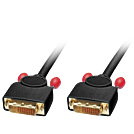
The LINDY DVI-D Dual Link Cable is ideal for use as an LCD monitor cable or DVI projector cable. Just one of our huge range of DVI cables and DVI leads which also includes DVI-I cables with analogue support. For connecting DVI devices at distances of over 10m use our Super Long Distance DVI Cables.
Package Contents:
3m Dual Link DVI-D Cable, Black
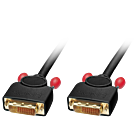
The LINDY DVI-D Dual Link Cable is ideal for use as an LCD monitor cable or DVI projector cable. Just one of our huge range of DVI cables and DVI leads which also includes DVI-I cables with analogue support. For connecting DVI devices at distances of over 10m use our Super Long Distance DVI Cables.
Package Contents:
2m Dual Link DVI-D Cable, Black
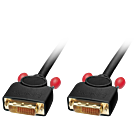
The LINDY DVI-D Dual Link Cable is ideal for use as an LCD monitor cable or DVI projector cable. Just one of our huge range of DVI cables and DVI leads which also includes DVI-I cables with analogue support. For connecting DVI devices at distances of over 10m use our Super Long Distance DVI Cables.
Package Contents:
1m Dual Link DVI-D Cable, Black
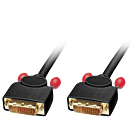
The LINDY DVI-D Dual Link Cable is ideal for use as an LCD monitor cable or DVI projector cable. Just one of our huge range of DVI cables and DVI leads which also includes DVI-I cables with analogue support. For connecting DVI devices at distances of over 10m use our Super Long Distance DVI Cables.
Package Contents:
0.5m Dual Link DVI-D Cable, Black
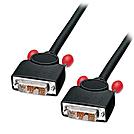
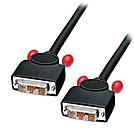
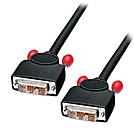
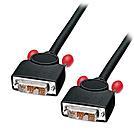
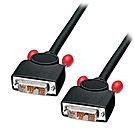
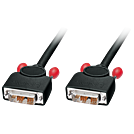
Standard DVI-D (Single Link) cable for digital monitors with DVI-D connectors on both sides
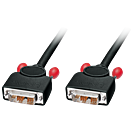
Standard DVI-D (Single Link) cable for digital monitors with DVI-D connectors on both sides
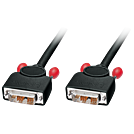
Standard DVI-D (Single Link) cable for digital monitors with DVI-D connectors on both sides
 |
 |