
We use third party services that help us to improve and optimize our online experience. For the use of certain services we need your prior consent which can be revoked at any time. You can find further information on data protection in our privacy policy
Details
In order to optimise our website, we use services that collect and aggregate data and make it available to us as a statistical overview.
You are here: » Homepage
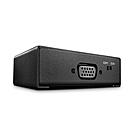
The Lindy EDID Recorder is a useful solution to solving a variety of EDID compatibility issues that may occur when connecting mixed displays or using splitters, extenders or switches.
This recorder intelligently copies a connected HDMI®, VGA or DVI displays EDID and stores it, to then be repeatedly used with Lindy_s range of EDID emulators (32104, 32121 and 32122), overwriting the emulator_s pre-set EDID to ensure seamless compatibility within the installation. The EDID recorder_s simple switch for copying EDID information allows for hassle free use for both professional and first time users.
This recorder is also backwards compatible with previous Lindy EDID emulators 32101 and 32102.
The terms HDMI, HDMI High-Definition Multimedia Interface, HDMI Trade dress and the HDMI Logos are trademarks or registered trademarks of HDMI Licensing Administrator, Inc.
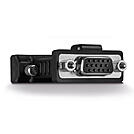
The Lindy VGA EDID Emulator is designed for systems that require EDID signals to be continuously provided without interruption and helps overcome EDID related problems which can occur when using AV/KVM extenders, switches and splitters. It can also be used in place of a monitor to keep the graphics card of a PC or server awake for remote access via IP. With support for resolutions up to 1920x1200@60Hz, the emulator is suitable for use with legacy PCs and displays. When used with the Lindy EDID recorder (32120) this device can provide cloned EDID information to the graphics card.
It is also possible to use the Emulator without cloning a display as it comes complete with pre-set EDID data for the most commonly used resolution/timing combinations, please see the Technical Information section for a full breakdown.
 |