
We use third party services that help us to improve and optimize our online experience. For the use of certain services we need your prior consent which can be revoked at any time. You can find further information on data protection in our privacy policy
Details
In order to optimise our website, we use services that collect and aggregate data and make it available to us as a statistical overview.
You are here: » Homepage
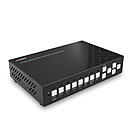
This advanced HDMI® 4K60 Switch is able to display up to 4 sources at the same time on a 4K screen with KVM control connecting also the USB Type B ports. There are 5 different Multiview modes, Single, PIP, PBP, 3xWIN and 4xWIN while with USB roaming function is possible to get the KVM control of different sources by simply moving the mouse pointer from one window to another.
The unit has 4 HDMI® and 1 USB Type C video inputs, switching between the sources is seamless, without any black screen or screen freezing. All the features can be managed in many ways, by pushing the buttons on the front panel via OSD menu, IR remote control (included), keyboard hot-keys for KVM selection, TCP/IP or RS-232 software GUI and commands. All of these different possibilities and features make this Switch perfect for any kind of installation, from AV pro solutions to mission critical control rooms, in broadcasting, E-Sports and security applications.
It provides also one additional HDMI® mirrored output for local monitoring or for video capture adding a HDMI® to USB video capture device. 3.5mm analog and TosLink digital optical audio outputs allow to manage independent audio selection, supporting many audio formats; with LPCM 2.0 format the volume can be controlled as well.
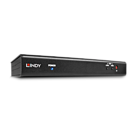
This HDMI® 4x1 Multi-View Switch is a high performance video switch which allows signals from four different Full HD sources to be integrated for simultaneous display on a single monitor. Featuring four different viewing modes (Quad-View, Full Screen, Picture and Picture & Dual Video) the Multi-view switch allows for the monitoring of multiple video sources in different viewing configurations to meet the requirements of standard installations.
To ensure optimal performance in mission critical environments the Switch provides seamless switching, ensuring that there is no frame loss whilst switching between the connected source devices or between different picture modes.
Full HD 1080p resolutions are supported on both the input and output for simple integration within typical business environments, whilst the output can be down-scaled to 720p for operation with legacy displays.
Switching between audio and video channels can be completed independently using either the supplied remote control or using the front panel buttons. This independent switching allows a single audio source to be used continuously whilst switching between the connected source devices or conversely a single video source to be monitored whilst the audio source is switched.
This flexible, cost effective switch has been designed to be used in a number of different applications, such as:
Please note: HDCP is always enabled on the output connection.
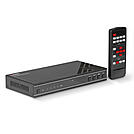
This HDMI® 4x1 Multi-View Switch is a high-performance video switch designed for 4K displays, enabling signals from up to four different Ultra HD sources to be seamlessly integrated for simultaneous display on a single monitor. With four distinct viewing modes (Quad-View, Full Screen, Picture in Picture, and Dual Video), this Multi-View switch accommodates the monitoring of multiple video sources in various configurations supporting Ultra HD 4K resolutions on both input and output.
In mission-critical environments, the switch ensures optimal performance through seamless switching, eliminating frame loss during transitions between connected source devices or different picture modes. It offers a cost-effective switch for different applications such as;
The switch allows independent switching between audio and video channels, offering flexibility in operation. This can be achieved by using the provided remote control or the front panel buttons, as well as RS-232 Control. Seamlessly transition between connected source devices, maintaining continuous use of a single audio source or monitoring a single video source while effortlessly switching to the other.
The terms HDMI, HDMI High-Definition Multimedia Interface, HDMI Trade dress and the HDMI Logos are trademarks or registered trademarks of HDMI Licensing Administrator, Inc.
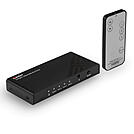
HDMI® switches are reliable solutions for controlling and switching multiple HDMI® source devices and outputting to a single display.
The Lindy 3 Port HDMI® 18G switch is a compact, high quality solution for effortlessly switching between 3 HDMI® source devices when connected to a single display.
Supporting HDMI® 18G signals, this switch allows for the transmission of detailed 4K Ultra HD resolutions, while additional support for HDR ensures video content features greater contrasts and a much wider colour gamut. This switch is perfect for a premium residential setup, eye-catching digital signage in retail settings or engaging presentations. HDCP 2.2 support ensures there are no compatibility issues with a variety of 4K content from source devices including set top boxes, Blu-Ray players and 4K HDR media players.
This switch also provides efficient, simple switching options for the user, via an included IR remote or push buttons on the main unit. The switch can also identify the active HDMI® source device and automatically switch to this option, providing a useful solution for when the unit is required to be out of sight.
The terms HDMI, HDMI High-Definition Multimedia Interface, HDMI Trade dress and the HDMI Logos are trademarks or registered trademarks of HDMI Licensing Administrator, Inc.
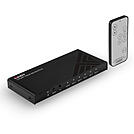
HDMI® switches are reliable solutions for controlling and switching multiple HDMI® source devices and outputting to a single display.
The Lindy 5 Port HDMI® 18G switch is a compact, high quality solution for effortlessly switching between 5 HDMI® source devices when connected to a single display.
Supporting HDMI® 18G signals, this switch allows for the transmission of detailed 4K Ultra HD resolutions, while additional support for HDR ensures video content features greater contrasts and a much wider colour gamut. The switch is perfect for a premium residential setup, eye-catching digital signage in retail settings or engaging presentations. HDCP 2.2 support ensures there are no compatibility issues with a variety of 4K content from source devices including set top boxes, Blu-Ray players and 4K HDR media players.
This switch also provides efficient, simple switching options for the user, via an included IR remote or push buttons on the main unit. The switch can also identify the active HDMI® source device and automatically switch to this option, providing a useful solution for when the unit is required to be out of sight.
The terms HDMI, HDMI High-Definition Multimedia Interface, HDMI Trade dress and the HDMI Logos are trademarks or registered trademarks of HDMI Licensing Administrator, Inc.
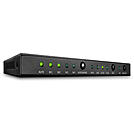
The Lindy 4 Port HDMI® 2.0 18G Switch with Audio is a professional solution for providing simple yet reliable switching control over 4 HDMI® source devices connected to a single HDMI® display, while also expanding a displays HDMI® port connections. Supporting HDMI® 2.0 18G signals, this switch allows for the transmission of detailed 4K Ultra HD resolutions, while additional support for High-Dynamic Range ensures video content can be seen with enhanced brightness, greater contrasts and a much wider colour gamut, perfect for a premium home cinema experience, eye-catching digital signage in retail settings or engaging presentations.
HDCP 2.2 support ensures there are no issues with a variety of 4K content when connected to source devices including set top boxes, Blu-Ray players and 4K HDR media players.
As well as HDMI® audio pass-through, the switches 3.5mm audio port allows for a separate connection of both analogue speaker systems, and optical audio devices such as soundbars and amplifiers via the included adapter, great for ensuring a multi-channel audio experience to provide a heightened sense of realism for the viewer.
This 4 Port HDMI® switch also provides a huge range of easy control options for the user, to ensure efficient, hassle free usage for both new, and experienced users. The switch itself can be controlled manually via push button switching, while it can also identify the active HDMI® source device and automatically switch to this option.
The included remote control allows the user to have convenient control over multiple videos and audio formats from a distance, great for trade show demonstrations or training presentations, while the RS-232 connection can be used for professional PC control of the switch, or integrating it into other automated PC control systems.
The terms HDMI, HDMI High-Definition Multimedia Interface, HDMI Trade dress and the HDMI Logos are trademarks or registered trademarks of HDMI Licensing Administrator, Inc.
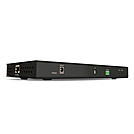
HDMI® Multi-view switches are professional solutions for showing one or more sources of HDMI® content on a single display.
The Lindy HDMI® 4K30 Multi-view Switch is a high performance solution for switching between a single or multiple HDMI® source devices and outputting to a single HDMI® display or projector. As well as standard switching between up to 9 devices, content can be viewed from all connected devices in a variety of layouts in the display, ideal for a wide range of scenarios.
These scenarios include the connection of two source devices in split screen layouts, which provide a useful layout for small scale CCTV or supporting content in retail stores, to the connection of 9 inputs for use in traffic monitoring or TV broadcasting facilities.
Resolutions up to 4K UHD 3840x2160@30Hz are supported providing an optimum viewing experience in detailed digital signage, security or broadcasting installations.
Switching can be easily controlled by the user via the push button on the main unit, or using the IR remote control, which also allows for hassle free switching between layouts modes. The switch also allows for output resolution scaling to ensure a consistent image quality within a setup, as well as independent audio switching from the connected HDMI® devices, great for adding music or alternative commentary to video content from a separate HDMI® source. Both features can also be easily controlled using the IR remote. RS-232 serial switching can also be used for control via a PC connection.
Seamless switching guarantees there is almost no downtime when alternating between connections, ensuring there is no interruption of content, meaning nothing is missed by the viewer when experiencing live sports or breaking news headlines.
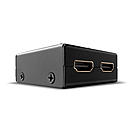
The Lindy HDMI® 18G Bi-directional Switch allows the user to connect two 4K Ultra High Definition source devices such as Blu-Ray players or games consoles to a single 4K Ultra HD display or projector and easily switch between them at the push of a button. Alternatively, connect one 4K Ultra HD source can be connected to two 4K Ultra HD displays or projectors and switch between displays at the touch of a button.
With support for resolutions up to 4K 3840x2160 @60Hz, this switch ensures a superior visual experience within residential, education or conferencing installations.
The switch_s minimalistic design, with no external power requirement, allows for a clean, discreet installation.
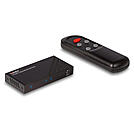
HDMI® switches are reliable solutions for controlling and switching multiple HDMI® source devices and outputting to a single display.
The Lindy 2 Port HDMI® 8K60 switch is a compact, high quality solution for effortlessly switching between 2 HDMI® source devices when connected to a single display.
Supporting HDMI® 48G signals, this switch allows for the transmission of detailed 8K Ultra High Speed resolutions, while additional support for HDR ensures video content features greater contrasts and a much wider colour gamut. This switch is perfect for a premium residential setup, eye-catching digital signage in retail settings or engaging presentations.
This switch also provides efficient, simple switching options for the user, via an included IR remote or push buttons on the main unit. The switch can also identify the active HDMI® source device and automatically switch to this option, providing a useful solution for when the unit is required to be out of sight. HDCP 2.3 ensures the compatibility with a variety of 8K content from source devices including set top boxes, Graphics cards, Blu-Ray players and 8K HDR Media players.
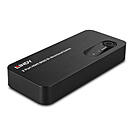
The Lindy HDMI® 8K60 Bi-Directional Switch allows the user to connect two 8K source devices such as Blu-Ray players or games consoles to a single 8K display or projector and easily switch between them at the push of a button. Alternatively, connect one 8K source can be connected to two 8K displays or projectors and switch between displays at the touch of a button.
With support for resolutions up to 8K 7680x4320 @ 60Hz or 3840x2160 @ 120Hz, this switch ensures a superior visual experience within residential, education or conferencing installations.
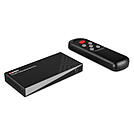
HDMI® switches are reliable solutions for controlling and switching multiple HDMI® source devices and outputting to a single display.
The Lindy 3 Port HDMI® 8K60 switch is a compact, high quality solution for effortlessly switching between 3 HDMI® source devices when connected to a single display.
Supporting HDMI® 48G signals, this switch allows for the transmission of detailed 8K Ultra High Speed resolutions, while additional support for HDR ensures video content features greater contrasts and a much wider colour gamut. This switch is perfect for a premium residential setup, eye-catching digital signage in retail settings or engaging presentations.
This switch also provides efficient, simple switching options for the user, via an included IR remote or push buttons on the main unit. The switch can also identify the active HDMI® source device and automatically switch to this option, providing a useful solution for when the unit is required to be out of sight. HDCP 2.3 ensures the compatibility with a variety of 8K content from source devices including set top boxes, Graphics cards, Blu-Ray players and 8K HDR Media players.
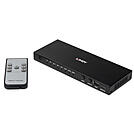
The Lindy 4 Port HDMI® 8K Switch with eARC is a professional solution for providing simple yet reliable switching control over 4 HDMI® source devices connected to a single HDMI® display, while also expanding a displays HDMI® port connections. Supporting HDMI® 2.1 48G signals, this switch allows for the transmission of detailed 8K resolutions, while additional support for High-Dynamic Range ensures video content can be seen with enhanced brightness, greater contrasts and a much wider colour gamut, perfect for a premium home cinema experience, eye-catching digital signage in retail settings or engaging presentations. HDCP 2.3 support ensures there are no issues with a variety of 8K content when connected to source devices including set top boxes, Blu-Ray players and 8K HDR media players.
As well as HDMI® audio pass-through, the switches 3.5mm audio port allows for a separate connection of both analogue speaker systems, and optical audio devices such as soundbars and amplifiers, great for ensuring a multi-channel audio experience to provide a heightened sense of realism for the viewer.
The Switch also supports eARC (Enhanced Audio Return Channel), enabling high-quality audio formats like Dolby Atmos and DTS:X to be transmitted directly to compatible audio devices. This simplifies setups by using the HDMI® cable for audio, reducing extra cables and enhancing the immersive audio experience, perfect for high-end home theater systems.
This 4 Port HDMI® switch also provides a huge range of seamless control options for the user, to ensure efficient, hassle free usage for both new, and experienced users. The switch itself can be controlled manually via push button switching, while it can also identify the active HDMI® source device and automatically switch to this option.
The included remote control allows the user to have convenient control over multiple videos and audio formats from a distance, great for trade show demonstrations or training presentations.
The terms HDMI, HDMI High-Definition Multimedia Interface, HDMI Trade dress and the HDMI Logos are trademarks or registered trademarks of HDMI Licensing Administrator, Inc.
An HDMI switch connects multiple HDMI sources to a single HDMI input on a monitor, display or projector and forwards the signal of the active source to the screen. In conference rooms, training rooms or control centres, laptops, PCs, conferencing systems and media players stay permanently connected, so there is no more swapping cables. Switching is done via push button, IR remote control, automatically or through the media control system.
Benefits at a glance: fast source switching in meetings, fewer cables on the table, centralised control and full image quality up to 4K or 8K without noticeable delay.
HDMI 2.0 switches transmit 4K 60Hz with HDR at 18 Gbit/s and support HDCP 2.2. This is sufficient for most meeting and presentation rooms.
HDMI 2.1 switches offer up to 48 Gbit/s for 4K 120Hz and 8K 60Hz as well as HDCP 2.3. They are the future-proof choice for high-resolution displays, visualisation and video walls.
Make sure that the HDMI cable also supports the appropriate version.
An HDMI switch routes multiple sources to one screen.
An HDMI splitter distributes one signal to multiple displays simultaneously, e.g. for digital signage.
An HDMI matrix routes any source to any output, from 2x2 to 16x16, ideal for conference areas, lecture halls and control rooms.
Multi-view switches display several sources simultaneously on one screen, seamless switches change sources without picture dropouts.
The key factors are the number of inputs and outputs, the HDMI version and integration.
The switch combines multiple sources onto one screen, the splitter distributes one source to multiple screens.
As soon as multiple sources need to be routed independently to multiple displays.
An HDMI 2.1 switch with 48 Gbit/s and an Ultra High Speed HDMI cable.
Lindy develops HDMI switches, splitters and matrices for conference rooms, education and AV technology, from the compact 2-port switch to the controllable 16x16 matrix. System integrators and IT departments can contact our technical sales team for advice on projects and volume pricing.